
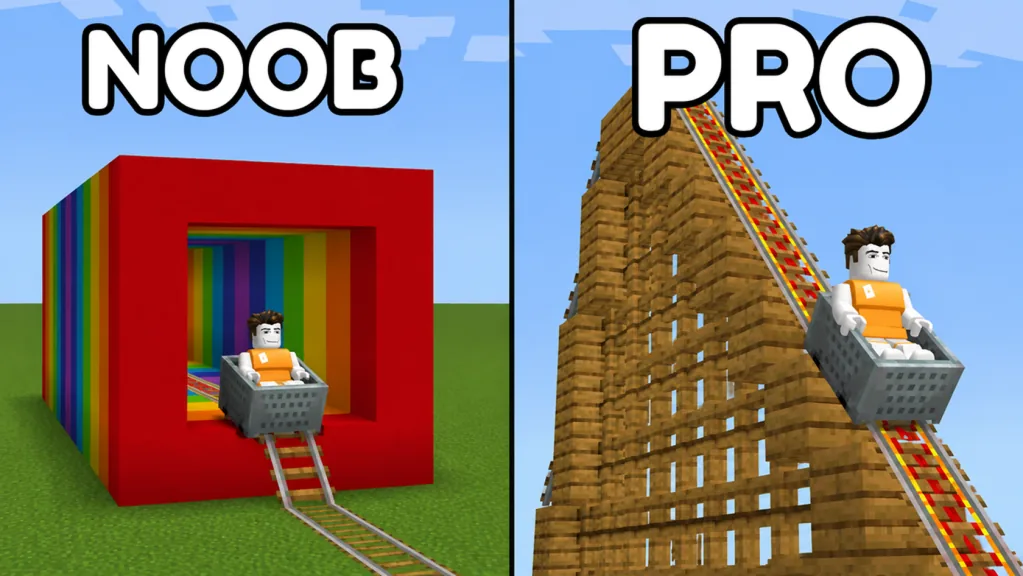
Separate the ride route from its wooden theme
Start with a compact rail layout you can test, then develop a wooden framework around its outline. Use wooden building materials for the visual theme while keeping the route’s joins visible during construction.
Keep the first wooden design to a footprint and repeating frame pattern you can follow as you ride. Build the height for the look you want, and check the current track and building descriptions before treating the frame as a lift or structural requirement.
Choose a manageable footprint
Sketch a simple outline before filling the workspace. Decide where the ride starts, where it changes direction and which side of the structure you want to show most clearly.
Keep the first version small enough to inspect from outside. A compact rectangle or a short route with one main feature gives you fewer joins to investigate while choosing the wooden pattern.
Build and test the rail section first. Use the straight track guide or curved track guide for that baseline. Keep a saved version you recognize before starting a larger visual pass.
Build a small framework sample
Open BLOCKS and inspect the wooden materials in BUILDING. Choose pieces available on your current account and make one small sample beside the route.
Think about the frame as a pattern you can repeat. Compare the sample from the intended viewing side and from the cart before continuing around the entire coaster.
| Design choice | Useful sample to build | What to inspect |
|---|---|---|
| Repeated columns | A short row beside one section | Spacing and consistency |
| Horizontal bands | One level across a small frame | Whether the outline reads clearly |
| A taller silhouette | A small feature within the footprint | How it looks from outside and during the ride |
| A recognizable entrance | One visual marker near the start | Whether the rider can identify the route’s beginning |
Choose the frame’s appearance from these samples. For rail-support requirements, read the current building descriptions rather than treating the sample as a rule.
Keep inspection access while expanding
Add the next part of the framework in a separate pass. Leave yourself clear views of the rail connections so you can still inspect the ride when something changes.
Repeat the sample deliberately. If the spacing or material selection changes halfway through, decide whether that variation is intentional before continuing. A small correction is easier to make while the surrounding pattern remains unfinished.
Check the view from the cart after each addition you want to keep. Compare the structure’s appearance with the previous pass and investigate any new ride fault at its first unexpected point.
Treat height as its own experiment
If you want to develop a taller route, add that change separately from the framework pattern. Test the current layout, change a small section, and compare the result before building the rest of the structure around it.
Read the current track and building descriptions for relevant limits or effects. Open the INFINITY HEIGHT offer and read its current restrictions and purchase terms before using it to plan a taller build.
Do not combine a new height change, a special rail and a major scenery revision in one test. Keeping them separate makes it easier to decide what to inspect next. Use the track types guide for a rail comparison.
Finish the outline before adding small details
Step back and look at the whole project. Check whether the entrance, route and wooden silhouette match the design you intended.
Then make a final rider-view pass. Decide which details help the theme and which make the route harder to read. Save the version you want to keep after that final check, then inspect its card.
Use the decoration guide for the surrounding landmarks. Keep that task separate from extending the route again.
FAQ
What should I make before the wooden framework?
Build and test a compact rail route. Use it as a reference while developing the visual structure.
Are the columns a verified structural requirement?
Use the framework as a design idea. Check the current building descriptions before treating those columns as required supports or a load-bearing formula.
Should I add the entire tall route at once?
Test a small height change separately. Compare the ride before building more scenery around the new section.
Which wooden materials should I use?
Inspect your current BUILDING catalog and choose a small set you can repeat consistently. Test one sample before expanding the pattern.